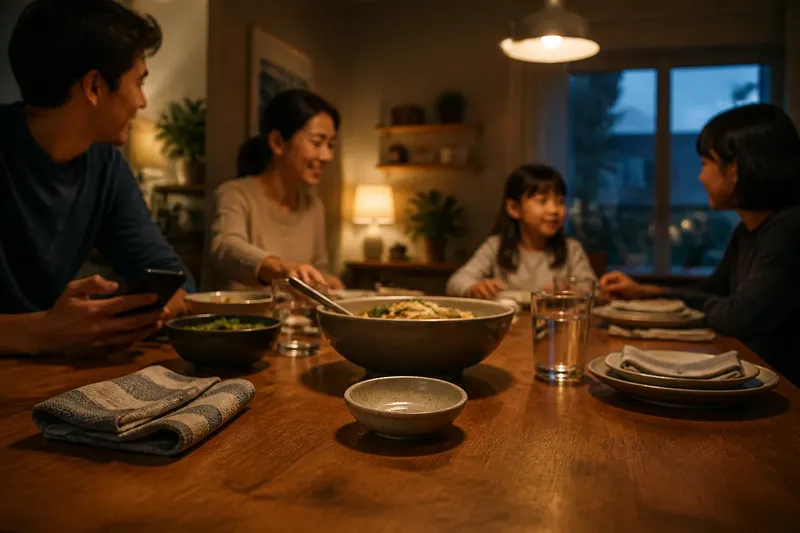
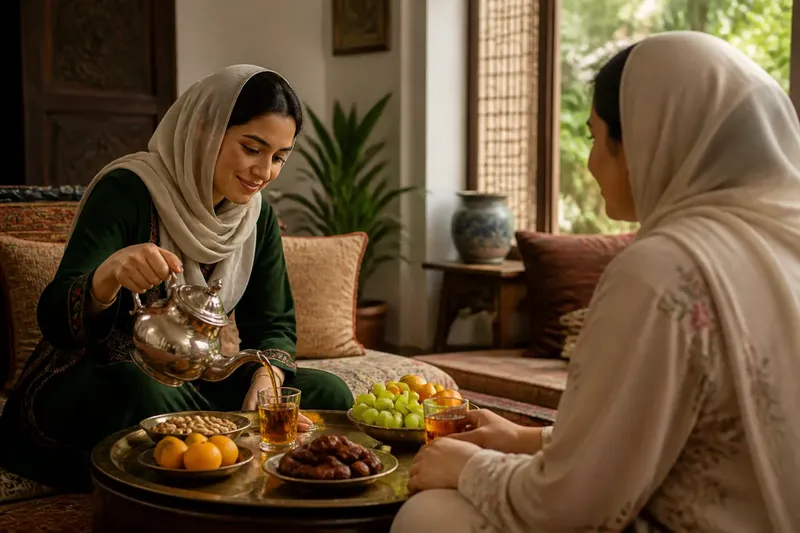
A Family Gathering with Customs from More Than One Place
Plan a family gathering with customs from more than one place by asking what matters, offering flexible ways to join, and avoiding awkward assumptions.
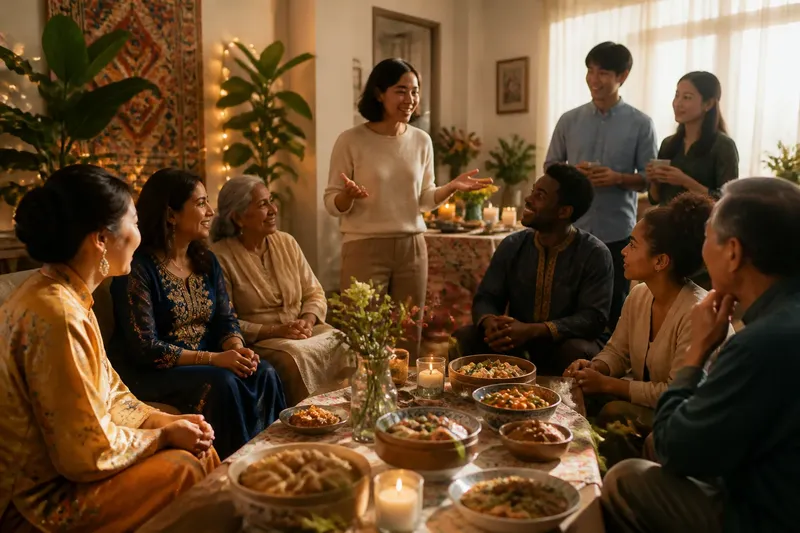
The most common mistake at a family gathering with customs from more than one place is choosing a tradition on someone else’s behalf. A familiar song, greeting, or serving order can feel welcoming to one relative and uncomfortable to another; the cost is a gathering that asks guests to explain themselves instead of letting them participate on their own terms.
A better plan starts with a small question: “What would you like us to include, if anything?” Ask people directly, privately if that feels easier, and make clear that passing is a valid answer. Then shape the gathering around what participants actually want, rather than treating anyone as a spokesperson for a whole culture.
Ask before arranging
Talk with the people whose customs you hope to acknowledge before you buy supplies, print a program, or assign a role. A relative might value a particular greeting but not want to lead it. Someone else may prefer a quiet personal observance, or may not practice a custom associated with their family background at all.
Keep the question specific and open. Instead of asking, “What do people from your culture do?” try: “Is there a greeting, food, song, or moment that would feel meaningful to you at this gathering?” Follow with: “Would you like to take part, have someone else handle it, or leave it out?” These questions invite a personal preference, not a cultural lesson.
Ask about practical needs as well as meaning. A custom might involve a particular time, seating arrangement, food, or quiet space. Find out what is important and what can be adapted. If several relatives share a background but give different answers, honor the difference rather than forcing a single family position.
Choose by situation
There is no single format that suits every gathering. The useful choice depends on who is present, how much they want to participate, and whether the customs fit together without turning the event into a performance.
- One person has a strong preference. Make room for the custom in the form they requested, and agree on their role in advance. This works when the person wants to share something specific but does not want to represent others.
- Several people want to contribute different customs. Give each contribution its own moment or area, and let participants decide how to join. This suits gatherings where variety matters more than making every practice look alike.
- Guests are curious but unfamiliar with the customs. Offer a brief explanation only if the people connected to the custom want one. This gives guests context without turning relatives into on-demand teachers.
- People disagree about what belongs. Keep the shared event simple and offer optional ways to participate privately or in smaller groups. This respects differences without making one person’s preference a public debate.
- Someone would rather not include a custom. Leave it out. A family connection does not create an obligation to perform, explain, or preserve a practice at a particular event.
These options can overlap. A gathering might include one requested greeting, an optional food table, and no formal explanation. The point is not to display the largest number of customs. It is to let people choose what feels sincere and comfortable.
Build flexible moments
Plan a few clear moments where customs can fit, but keep the schedule loose enough to accommodate a change of mind. For example, a host might welcome guests in one shared space, leave a quieter corner available, and set aside time for a family contribution after people have arrived. That structure creates room without requiring everyone to follow one sequence.
Make participation visible as a choice. A host can say, “You’re welcome to join, watch, or take a break,” rather than calling out who should take part. Avoid surprise invitations to lead a prayer, explain a garment, translate a phrase, or demonstrate a practice. Someone may be happy to contribute after agreeing beforehand and still dislike being put on the spot.
Think through the physical setup. Chairs arranged in a circle may help conversation, while a clear route to the food table can make movement easier. If a custom calls for a particular arrangement, ask the person involved what would be comfortable. A simple note on a place card or a spoken invitation can explain an optional moment without labeling guests by background.
Keep food and language open
Food often carries family meaning, but one dish cannot stand for everyone’s heritage. Ask about specific ingredients, preparation preferences, and whether a dish should be shared or kept separate. If people bring food, make room for them to describe it in their own words—or not describe it at all.
When a dish needs an ingredient note, use a plain label and confirm the wording with the person who prepared it. Do not guess at dietary rules from someone’s name, clothing, or family origin. For allergies or other health concerns, ask the guest what information and arrangements they need; when a serious concern is involved, follow qualified medical advice.
Language deserves the same care. A greeting in a family language can be warmly received, but pronunciation or translation should not become a public test. Ask the person who suggested it how they want it spoken, and whether they want to explain it. If the answer is no, the greeting can still belong without a lecture attached.
When should you ask relatives?
Ask as soon as you begin planning, while there is still room to change the schedule or setup. A private conversation or message can make it easier to say no than a question asked in front of the whole family.
What if customs conflict?
First find out whether the conflict is practical, personal, or only assumed. If both requests cannot share the same moment, offer separate optional moments or leave the disputed element out rather than asking one relative to defend a position publicly.
How much explanation is enough?
Use the explanation the person connected to the custom wants, which may be a short sentence or none at all. Guests can be invited to ask the host later instead of treating the person who contributed as a permanent guide.
What if someone opts out?
Accept the answer without asking for a reason. Keep the gathering welcoming through ordinary hospitality, and do not frame a person’s choice as rejection of their family or background.
Picture the plan
Imagine that Sam is hosting a gathering for relatives who grew up in different places. One aunt asks for a greeting in her family’s language; a cousin says he would rather not speak publicly; another guest asks whether a familiar dish can be served without a particular ingredient. Sam confirms the wording with the aunt, lets the cousin join by listening or skip the moment, and checks the dish details with its cook. The expected result is a gathering with several available ways to participate, not a staged display that assigns each person a role.
Before guests arrive, check the plan against a few concrete questions:
- Who asked for each custom? Keep only the details someone has chosen to share.
- Is participation optional? Make watching, stepping away, and declining ordinary choices.
- Does anyone have an assigned role? Confirm it with that person rather than announcing it as a surprise.
- Are food and access needs clear? Ask the relevant guests and cooks instead of relying on assumptions.
- Can the plan change? Leave room to adjust if someone becomes uncomfortable or circumstances shift.
Let the gathering stay human
A family event does not need to resolve every difference or explain every tradition. It can acknowledge that relatives carry distinct memories and preferences, then make practical room for them without demanding a single shared account.
For a family gathering with customs from more than one place, the most useful plan is one participants can shape and revise. Ask what matters, agree on what to include, and leave space for people to join in their own way. That small discipline makes hospitality more personal: the gathering reflects its guests, rather than asking guests to fit a script.