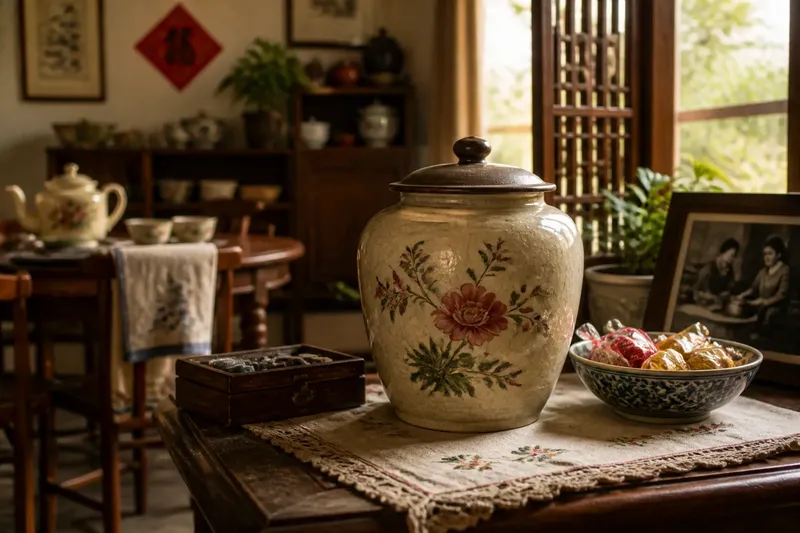
The Small Repetitions That Turn an Act into a Ritual
Small repetitions turn an ordinary act into a ritual with a steady cue and shared attention, while leaving room for different meanings and real life.
The most common mistake is treating a ritual as an ordinary act dressed up with extra ceremony; that can make a useful habit feel stiff and leave people unsure what to do. Small repetitions turn an ordinary act into a ritual when they help people recognize a moment, attend to it together, and give it meaning in their own way.
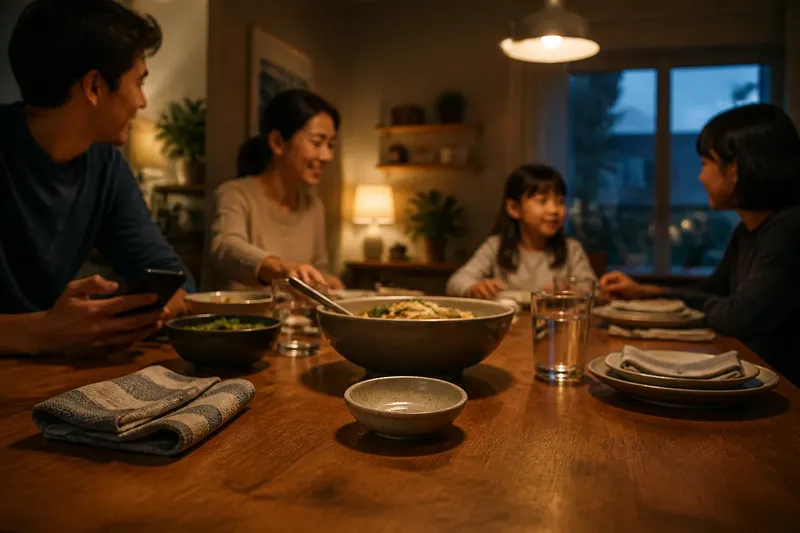
Consider a weekday table where a family pauses briefly before dinner. The act is modest. No special object or inherited script is required. Its ritual quality grows from when it happens, which parts recur, and how the people at the table respond.
The ordinary starting point
Imagine a household where dinner often begins in a rush. One person is answering messages, someone else is clearing a place, and the meal starts whenever the last pan reaches the table. The family wants a gentler beginning without imposing a formal ceremony or claiming a tradition that is not theirs.
They choose a simple cue: once the food is on the table, a small ceramic dish is set beside the serving bowl. The dish is already in the cupboard. It carries no special claim about ancestry or belief; its job is to make the transition visible. Whoever notices it can set down a phone, finish a sentence, or help with the last plate.
The dish does not make the moment meaningful by itself. It might be ignored, or its placement might become another chore. Meaning depends on the people and the moment, not on an object’s supposed power. The household has made a cue, not a rule.
A cue with room
A useful cue is easy to notice and interpret without a speech. It can be a sound, a gesture, an object, or a change in the room. Here, the dish gives dinner a visible threshold: scattered tasks are winding down, and attention can turn toward the table.
The cue should not demand identical responses. One person may put away a phone; another may help a child find a seat. A guest may keep talking until there is a natural pause. The cue invites a shared shift while leaving people dignity and choice.
That distinction matters in a home with different temperaments or schedules. A cue that becomes a command can produce compliance without attention. If the dish starts to feel like a signal that someone is about to correct the family, it has lost its usefulness. The household can move it, change it, or drop it.
Timing makes a pattern
The family places the dish at the same broad point in the evening: after the food reaches the table and before anyone begins serving. They do not set a clock or insist on a perfect start. A dependable moment gives the act a recognizable shape, while flexibility keeps it connected to real life.
Timing need not mean strict punctuality. A ritual can recur at a threshold rather than an exact hour: before leaving home, when the kettle is poured, or after the last plate is put away. The useful question is whether people can recognize the occasion without being told every time.
Evening routines shift. Someone may work late; a child may need attention; dinner may be a quick meal between errands. If the cue works only under ideal conditions, it is too fragile. The family can use it when they eat together and let it rest when other needs take priority. A pause that can be skipped without blame is more likely to remain welcoming.
Repetition without rigidity
After several evenings, the family notices the dish before anyone says anything. A person puts a phone face down. Someone asks whether there is room for another chair. The sequence is becoming familiar, but no one has memorized a script or been assigned a role.
Repetition gives people something to recognize. It can make an ordinary moment feel distinct from the minutes around it. Yet repeating every detail exactly is not what gives the act its meaning. A ritual can hold its shape while the words, participants, food, and mood change.
That is why the household avoids adding a required phrase. A spoken line might suit some families, but here it could turn a quiet invitation into a performance. Another household might prefer a few words of thanks, a brief silence, or a shared greeting. None is a universal ingredient.
For this family, the stable part is the transition: the dish appears, people notice, and the table receives their attention. The flexible part is what they do with that attention. Some evenings they talk. On others, they eat quietly or focus on helping a young child. The same cue can make space for different kinds of connection.
Shared attention, different meanings
Participants do not have to explain a ritual in the same terms. One person may value the pause because it makes dinner less hurried. Another may see it as a small sign of care. A child may simply understand that the meal is about to begin. These interpretations can coexist without being reduced to one official meaning.
A household may also have religious, regional, family, or personal traditions. Those deserve to be understood on their own terms, not folded into a generic account of ritual. The invented household’s ceramic dish is only a device for its own shared pause; it says nothing about the origins or purposes of anyone else’s practice.
When visitors join the family, the cue need not become a test. The hosts can let the moment happen naturally, or explain the dish in plain language if someone asks. They do not need to require guests to follow a private custom. Hospitality can make room for a ritual without turning participation into a condition of belonging.
Questions about changing rituals?
What makes an ordinary act feel like a ritual?
Recognizable repetition, a meaningful occasion, and shared attention can give an ordinary act a ritual shape. Meaning comes from how people take part, not from elaborate objects or formal language.
Does a ritual need to happen at an exact time?
No. A recurring cue such as the start of dinner or the moment before leaving can be steadier than a clock time. The pattern should fit the household’s actual rhythms.
Can people give the same ritual different meanings?
Yes. Participants can value the same repeated act for different reasons, or take part without describing it in the same way. Shared attention does not require identical interpretation.
What if a ritual starts to feel forced?
Notice which part feels burdensome, then loosen or remove it. A practice can change or stop; repetition is useful only while people can take part with genuine attention.
A pattern with limits
Imagine the family later in the season. The ceramic dish still appears before dinner when people gather, but one evening it stays in the cupboard because everyone eats at different times. The next evening, someone brings it out again. The pause returns without an announcement, and the family turns its attention toward the table before the meal begins.
The observable result is not that dinner has become solemn or that every evening feels calm. The household has a recognizable way to mark a transition when the moment suits them. The dish helps people notice; their actions give the cue its local meaning.
Repetition has limits. It cannot make a strained relationship easy by itself, and it should not conceal disagreement or become a tool for controlling others. If the family’s needs change, the pattern should change too. A ritual is a practice people maintain, not a verdict about how a home ought to feel.
To shape a similar ritual, start with a moment that already occurs and ask what small cue would help people notice it. Keep the action simple enough to repeat, allow different responses, and pay attention to whether it feels welcoming. The clearest sign that the pattern belongs in the household is not perfect consistency; it is that people can return to it freely, adapt it, and still recognize one another in the moment.